Mastering the Market: Essential Insights and Strategic Tips for Buying Commercial Property

Introduction: The High-Stakes World of Commercial Real Estate
Venturing into the world of commercial real estate (CRE) is often seen as a significant milestone for any investor or business owner. Unlike residential properties, where emotions and personal aesthetics often lead the way, commercial property for sale represents a different beast altogether—one driven by data, cash flow, and long-term strategic positioning. Whether you are looking for a small storefront, a sprawling warehouse, or a multi-story office complex, the journey toward a successful acquisition requires a blend of sharp financial acumen and a keen eye for market trends.
While the prospect of owning commercial property can be intimidating due to higher entry costs and more complex legalities, the rewards often far outweigh the risks. From stable rental income to significant tax benefits, CRE offers a pathway to wealth building that few other asset classes can match. In this guide, we will dive deep into the essential insights and practical tips that every buyer needs to navigate the current commercial landscape.






Understanding the Core Motivation: Why Buy Commercial?
Before browsing listings, it is crucial to understand why commercial property is a staple in high-net-worth portfolios. First and foremost is the yield. Historically, commercial properties offer a higher return on investment (ROI) compared to residential units, often ranging between 6% and 12%, depending on the location and sector. Furthermore, lease terms are typically much longer—ranging from three to ten years—providing a level of stability that residential ‘month-to-month’ or annual leases simply cannot provide.
Another significant advantage is the ‘triple net lease’ (NNN) structure, common in many sectors. In these arrangements, the tenant is responsible for paying the property taxes, insurance, and maintenance costs in addition to the rent. This minimizes the management burden on the owner and protects the bottom line from rising utility or repair costs. Essentially, the buyer becomes more of a financial manager than a hands-on landlord.
Identifying the Right Type of Property
Commercial property is an umbrella term for several distinct categories, each with its own risk profile and management requirements. Choosing the right one depends on your financial goals and risk tolerance.
1. Office Spaces
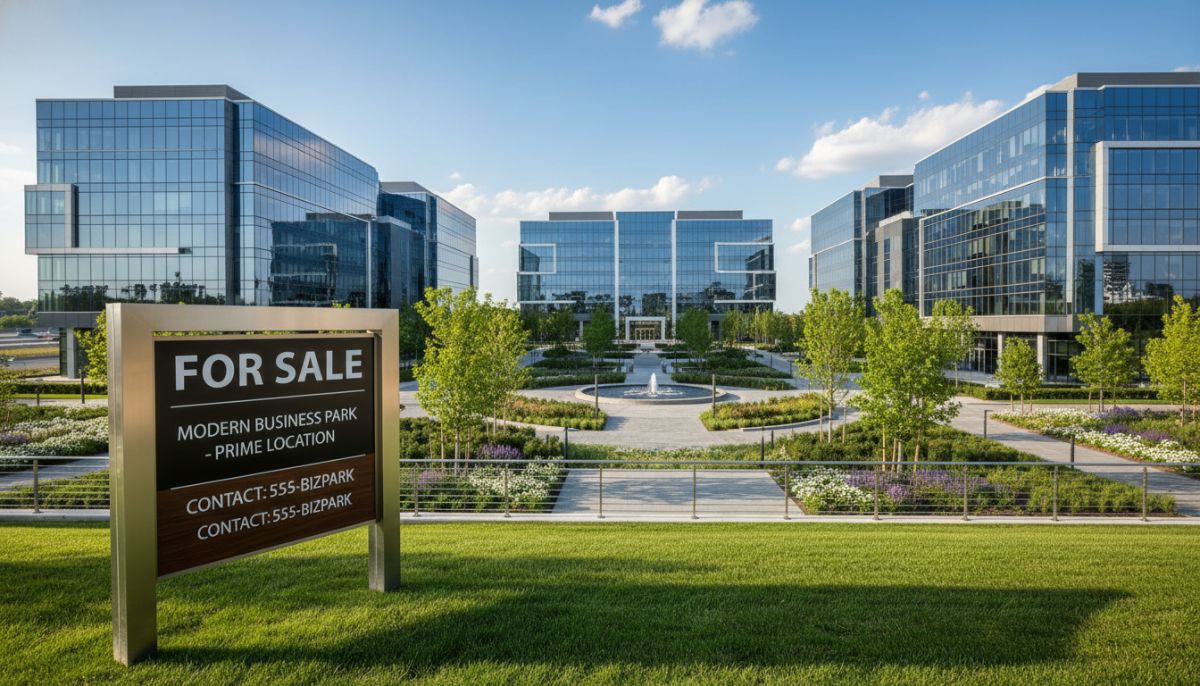
These range from small professional suites to large suburban corporate campuses. The rise of hybrid work has changed this sector, making ‘flex spaces’ and high-amenity buildings more valuable than traditional, rigid office blocks.
2. Retail Properties
This includes everything from strip malls to standalone flagship stores. Success here is entirely dependent on foot traffic, anchor tenants (like supermarkets), and the economic health of the surrounding neighborhood.
3. Industrial and Logistics
Perhaps the most resilient sector in recent years, industrial properties include warehouses and distribution centers. With the boom in e-commerce, well-located industrial space near major highways is in incredibly high demand.
4. Multifamily Housing
While residential in nature, large apartment complexes are treated as commercial investments. They offer high scalability and are generally considered lower risk because vacancies in one or two units do not cripple the entire income stream.
The Financial Metrics That Matter
When evaluating a commercial property for sale, the ‘asking price’ is only one part of the equation. You must look at the internal numbers to determine if the deal is truly profitable.
- Cap Rate (Capitalization Rate): This is the most common metric. It is calculated by dividing the Net Operating Income (NOI) by the current market value. A higher cap rate usually indicates a higher return, but also higher risk.
- NOI (Net Operating Income): This is the total income the property generates minus all operating expenses. It does not include mortgage payments or taxes.
- LTV (Loan-to-Value) Ratio: Commercial lenders are more conservative than residential ones. Expect to put down 25% to 35% as a down payment, as lenders rarely offer 100% financing for CRE.
- DSCR (Debt Service Coverage Ratio): Lenders use this to see if the property generates enough income to cover the debt. A ratio of 1.25 or higher is typically required.
Location and Zoning: The Silent Partners
In commercial real estate, the phrase ‘location, location, location’ carries extra weight. You aren’t just looking for a ‘nice neighborhood’; you are looking for economic synergy. Is the property near major transport hubs? Are there upcoming infrastructure projects that will increase the area’s value?
Equally important is zoning. Zoning laws dictate what you can and cannot do with the property. A building might look perfect for a trendy cafe, but if the area is zoned strictly for industrial use, your investment could be dead on arrival. Always verify ‘highest and best use’ potential before signing a contract. This involves researching local development plans and ensuring that the property’s current use is compliant with municipal regulations.
Conducting Rigorous Due Diligence
The due diligence period is the most critical phase of the buying process. This is your window to uncover any ‘skeletons in the closet.’ A comprehensive checklist should include:
1. Environmental Assessments (Phase I and II): Especially for industrial sites, you must ensure there is no soil or groundwater contamination that you would be liable for cleaning up.
2. Structural Inspections: Hire professionals to check the roof, HVAC systems, and the integrity of the foundation. Repairs on commercial systems can cost hundreds of thousands of dollars.
3. Lease Audits: If the property has existing tenants, review their leases thoroughly. Are they paying market rent? Are there clauses that allow them to break the lease if the building is sold?
4. Title Search: Ensure there are no liens or legal disputes regarding the property’s ownership.
Financing Your Commercial Acquisition
Financing a commercial deal is significantly different from getting a home mortgage. Loans are typically made to a business entity (like an LLC) rather than an individual. Interest rates are usually higher, and the terms are shorter, often featuring ‘ballon payments’ where the remaining balance must be paid or refinanced after 5 or 10 years.
To secure the best rates, prepare a solid ‘pro-forma’—a financial document showing the projected income and expenses of the property. Lenders want to see that you have a clear plan for property management and that the asset is capable of sustaining itself even during periods of vacancy.
Developing an Exit Strategy
Smart investors never enter a deal without knowing how they will exit. Are you planning to ‘hold and fold’—keeping the property for decades to generate passive income? Or are you looking for a ‘value-add’ opportunity where you renovate the space, increase the rents, and sell it for a profit in five years?
Consider the 1031 Exchange (in the US context) or similar tax-deferral mechanisms in your region. These allow you to sell a property and reinvest the proceeds into a new ‘like-kind’ investment without paying immediate capital gains taxes. This strategy is essential for building a massive portfolio over time.
Conclusion: The Path Forward
Buying commercial property is a journey that requires patience, discipline, and a willingness to do the homework. It is not a ‘get rich quick’ scheme but a strategic moveset for those looking to diversify their wealth and secure their financial future. By focusing on the right metrics, conducting deep due diligence, and understanding the nuances of the local market, you can turn a ‘For Sale’ sign into a cornerstone of your investment success.
Remember, you don’t have to go it alone. Surround yourself with a team of experts—including a specialized commercial broker, a real estate attorney, and a tax professional—to ensure that your first or next commercial purchase is a resounding success.